Personal Development
Personal Development Curriculum
Preparing students for life beyond school
Our Personal Development (PD) curriculum is an important part of life at Thornhill. It helps students develop the knowledge, skills and confidence they need to make informed decisions, build healthy relationships, stay safe and prepare for life beyond school.
Our curriculum is carefully planned and age-appropriate. Students revisit important topics as they move through the school, allowing them to build on what they already know and apply their learning to real-life situations.
The curriculum is informed by the Department for Education's statutory guidance for Relationships Education, Relationships and Sex Education (RSE) and Health Education, as well as relevant elements of Citizenship, careers education and financial education.
What do students learn?
Our PD curriculum covers four broad areas:
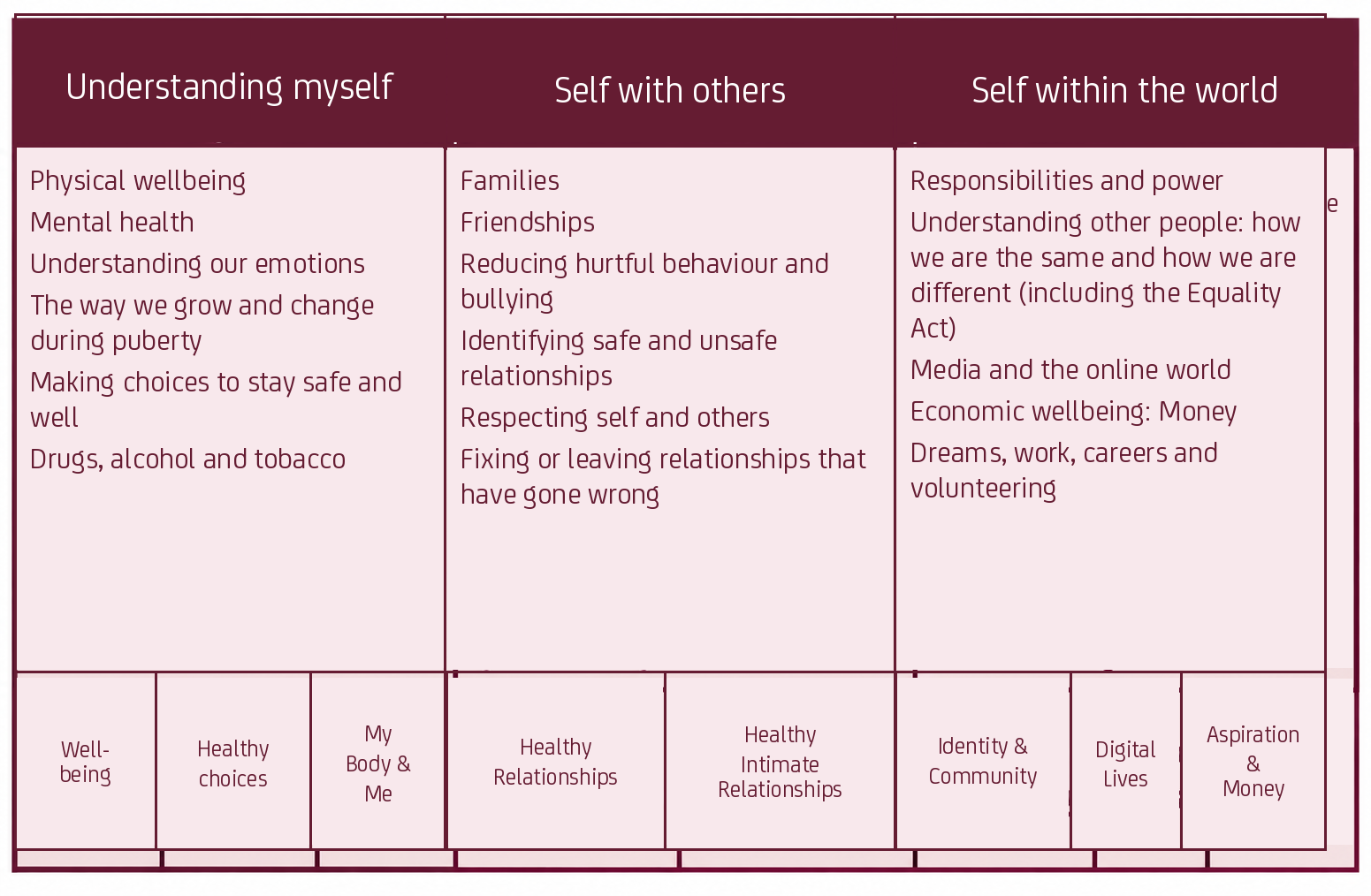
Below is a more detailed overview of our curriculum for each year group
Year 7 Curriculum
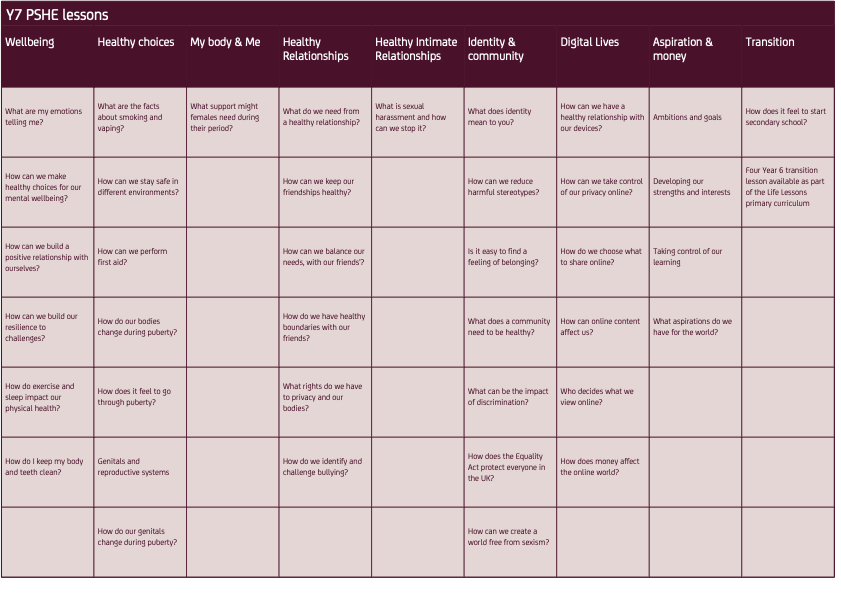
Year 8 Curriculum
Accordion content
Year 9 Curriculum
Accordion content
Year 10 Curriculum
Accordion content
Safeguarding and Staying Safe
Keeping students safe is at the heart of our Personal Development curriculum.
Students are taught how to recognise potentially unsafe or harmful situations and what they can do to protect themselves and others. This includes learning about:
-
Grooming and exploitation, including online exploitation;
-
Coercion and controlling behaviour;
-
Domestic abuse;
-
Sexual harassment and harmful sexual behaviour;
-
Criminal exploitation and county lines;
-
Online manipulation and emerging digital risks; and
-
The risks associated with AI-generated sexual imagery.
Throughout the curriculum, students are reminded of the trusted adults and support available to them and how to report a concern.
If a student makes a disclosure or raises a safeguarding concern during a PD lesson, this is dealt with in accordance with the school's safeguarding procedures.
Equality, Diversity and Respect
We want every student to feel valued, respected and included.
Students learn about equality and the protected characteristics set out in the Equality Act 2010. They are encouraged to challenge prejudice, discrimination and harmful stereotypes and to understand their rights and responsibilities.
Our curriculum promotes respectful discussion and helps students understand that people may have different experiences, identities, beliefs and backgrounds.
Developing Knowledge and Skills
PD is more than simply learning facts. Students are taught how to use their knowledge to make sensible and informed decisions.
Through discussion, scenarios, debate, reflection and practical activities, students develop skills such as:
-
Critical thinking;
-
Decision-making;
-
Communication;
-
Evaluating information, particularly online;
-
Recognising and managing risk;
-
Resilience;
-
Ethical reasoning; and
-
Knowing when and how to seek help.
We teach important vocabulary explicitly, helping students to talk confidently and appropriately about subjects that can sometimes be difficult or sensitive to discuss.
How do we know what students have learned?
PD is not an examination subject, but we regularly check students' understanding.
Teachers use questioning, discussion, retrieval activities, scenarios and written or creative reflections to identify what students know and understand. This helps teachers identify misconceptions and decide when important knowledge needs to be revisited.
Students are never expected to share personal experiences or disclose private information as part of an assessment. We assess their knowledge and understanding through fictional and realistic scenarios.
Preparing students for the future
Our aim is that every student leaves Thornhill with the knowledge, confidence and judgement to:
-
Build healthy and respectful relationships;
-
Recognise and respond to risk;
-
Look after their physical and mental wellbeing;
-
Make informed decisions;
-
Critically evaluate information;
-
Understand their rights and responsibilities;
-
Manage aspects of their personal finances;
-
Make informed choices about education, training and employment; and
-
Participate positively and responsibly in society.
Personal Development therefore plays an important role in preparing students not only for their time at school, but for life beyond it.
Working with Parents and Carers
We recognise that parents and carers play a vital role in their child's education. We aim to work in partnership with families and provide clear information about what students learn and why.
We work in partnership with Life Lessons and below is a link to their parents guide. If an alternative version is required please contact Mrs Cherry Crooks cherry.crooks@consilium-at.com.
Our RSE Policy is available on the school website. Parents and carers are welcome to contact the school if they have questions or would like further information about the curriculum.
Where external organisations or visitors contribute to PD, their involvement is carefully planned and quality-assured by the school and is delivered within our safeguarding and curriculum expectations.
Can parents withdraw their child from RSE?
Parents and carers have the right to request that their child is withdrawn from some or all sex education delivered as part of statutory RSE, subject to the arrangements set out in the Department for Education's statutory guidance.
There is no right to withdraw a student from:
-
Relationships Education;
-
Health Education; or
-
Statutory Science lessons, including relevant teaching about human development and reproduction.
What should I do if I have concerns?
We encourage parents and carers to speak to us before making a withdrawal request. We are happy to explain what is taught, why it is taught and how sensitive topics are approached.
If you wish to request withdrawal from sex education, please contact our Assistant Principal for Personal Development- cherry.crooks@consilium-at.com. We will arrange a discussion and make sure you have the information you need.
Where a student is withdrawn, appropriate educational provision will be made during those lessons.
Students' views
As students approach the end of compulsory schooling, they have an increasing voice in decisions about sex education. From three terms before a student turns 16, a student can choose to receive sex education even where a parent or carer has previously requested withdrawal.
We believe that open communication between school, students and families is the best way to ensure that young people receive accurate, age-appropriate information and are well prepared for adult life.